
7 Fall Maintenance Checks Every El Campo Fleet Should Make Before Peak Freight Season
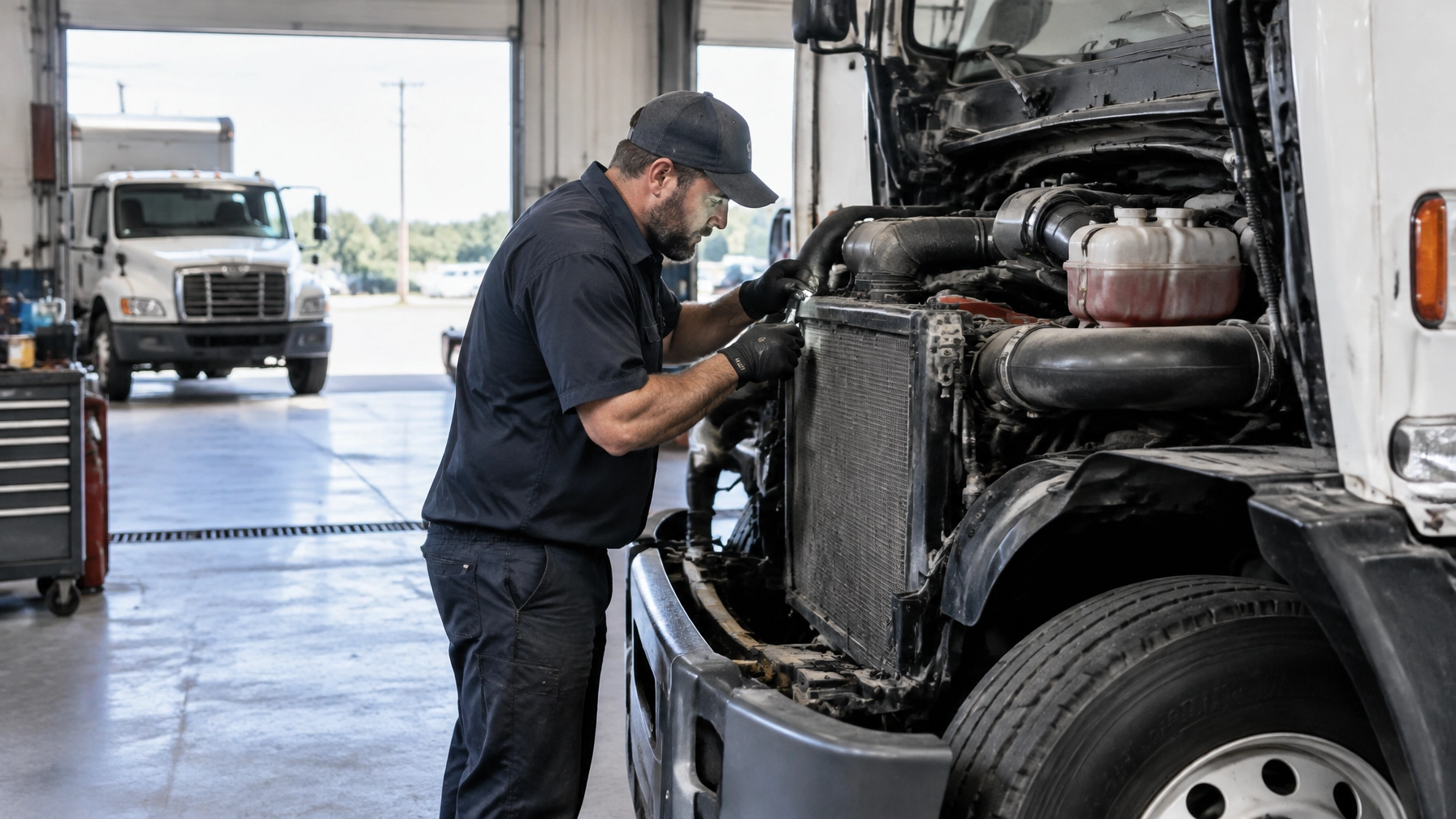
A fleet breakdown rarely happens at a convenient time. It happens when a delivery is already scheduled, a driver is waiting on a load, or one missing vehicle threatens to put an entire route behind schedule. During peak freight season, that interruption can cost far more than the repair itself.
For businesses in El Campo, fall is the right time to move from reactive repairs to preventive fleet care. Cooler weather, longer driving hours, heavier workloads, and changing road conditions can expose weaknesses that went unnoticed during the summer.
A thorough seasonal check can help you catch those problems while a vehicle is still in the shop: not stranded on the shoulder. Here are seven maintenance checks to put on your fleet schedule before freight demand increases.
1. Check the Cooling System Before the Workload Increases
A cooling system keeps engine temperature under control by circulating coolant through the engine and radiator. If coolant is low, contaminated, or leaking, the engine can overheat under load.
That risk does not disappear when summer ends. Fleet trucks may still face warm Texas afternoons, long highway runs, stop-and-go traffic, and heavy cargo. A weak cooling system can turn any of those conditions into an expensive breakdown.
During a fall inspection, have each vehicle checked for:
- Coolant level, condition, and freeze protection
- Leaks around the radiator, hoses, clamps, and water pump
- Cracked, swollen, or soft radiator hoses
- Damaged radiator fins or debris restricting airflow
- Thermostat and radiator cap operation
- Warning signs of overheating or coolant loss
Coolant should not simply be topped off without investigating why the level dropped. A small leak can become a major loss of fluid once the engine reaches operating temperature.
Our team can also test coolant condition and inspect the related components. Phantom Auto Repair’s guidance on understanding and maintaining your vehicle’s cooling system can help your maintenance team recognize early warning signs.
2. Perform Battery Load Testing on Every Vehicle
A battery may start a vehicle reliably one day and fail without warning the next. A visual inspection alone cannot tell you how much starting power remains. That is why battery load testing belongs on every pre-fall fleet checklist.
A load test measures whether the battery can deliver sufficient power under demand. It is different from checking voltage while the vehicle is parked. A battery can show an acceptable voltage reading and still lack the strength needed to crank the engine.
During the check, inspect:
- Battery age and overall condition
- Terminals for corrosion or loose connections
- Cables for damage, fraying, or poor contact
- Battery hold-down hardware
- Alternator output and charging performance
- Starter operation and slow-crank symptoms
Also check headlights, marker lights, warning lights, and other electrical equipment. Shorter daylight hours can mean more time spent driving before sunrise or after sunset, making dependable lighting especially important.
If a battery is near the end of its useful life, replacing it during scheduled maintenance is usually less disruptive than waiting for a roadside failure. For more information, see our guide to when a vehicle battery should be replaced.
3. Inspect Brakes Before Loads and Mileage Increase
Your fleet’s brakes work harder when vehicles carry heavy cargo, travel long routes, or make frequent stops. Brake problems also become more expensive when early wear is ignored. A worn brake pad or shoe can eventually damage rotors, drums, calipers, or other components.
A fall brake inspection should include:
- Brake pads or shoes and remaining friction material
- Rotors or drums for scoring, cracks, or excessive wear
- Brake fluid level and condition on hydraulic systems
- Brake lines and hoses for leaks, abrasion, or corrosion
- Parking brake operation
- Uneven braking, pulling, vibration, or unusual noises
Drivers should report changes in pedal feel immediately. A soft pedal, increased stopping distance, grinding noise, or vehicle pulling to one side should not be treated as a minor inconvenience.
A proper inspection can help you prioritize repairs across the fleet. Vehicles with the most urgent safety concerns can be handled first, while less critical maintenance can be planned around routes and operating demands. Our brake safety checklist for drivers in El Campo covers several warning signs worth discussing with your drivers.
4. Review Tires, Wheels, and Alignment
Tires are the only part of a vehicle touching the road, so their condition affects safety, fuel economy, handling, and uptime. A tire issue can also create collateral damage if a blowout affects a fender, wheel, suspension component, or cargo schedule.
Before the fall workload increases, inspect every vehicle for:
- Correct tire pressure
- Tread depth and irregular wear
- Cuts, punctures, bulges, and sidewall damage
- Exposed cords or signs of separation
- Wheel damage and loose or improperly torqued fasteners
- Alignment or suspension issues causing uneven wear
Underinflated tires increase rolling resistance and can generate excess heat. Overinflated tires may reduce traction and wear unevenly. Pressures should be checked when the tires are cold and adjusted according to the vehicle or tire manufacturer’s specifications.
If one tire is wearing faster than the others, replacing the tire alone may not solve the problem. Misalignment, worn suspension components, or incorrect inflation may be the underlying cause. Finding that cause helps prevent repeat costs and extends the life of the entire set.
5. Service Fluids and Filters According to the Maintenance Schedule
Fluids protect the parts that keep your fleet moving. Engine oil reduces friction, transmission fluid supports gear changes, coolant controls heat, and brake fluid transfers pressure through hydraulic brake systems.
A fall service should review:
- Engine oil level, condition, and service interval
- Transmission fluid level and condition
- Coolant and power steering fluid
- Brake fluid on hydraulic systems
- Windshield washer fluid
- Fuel, oil, engine air, and cabin air filters
- Visible leaks under the vehicle
Do not rely on a single mileage number for every vehicle. A truck used for towing, stop-and-go delivery work, or long periods of idling may need a different maintenance schedule than a lightly used van. Follow the manufacturer’s recommendations while also accounting for duty cycle, mileage, engine hours, and operating conditions.
Replacing a filter or servicing a fluid at the proper interval is usually predictable and manageable. Repairing an engine, transmission, or fuel system damaged by neglected maintenance is not.
6. Purge Moisture From Air Brake Systems
For vehicles equipped with air brakes, moisture control is an important part of seasonal preparation. Compressed air can collect water inside the system. If that moisture remains in the air tanks or related components, it may contribute to corrosion, poor performance, or freezing problems during colder weather.
Air brake maintenance should be performed according to the vehicle manufacturer’s procedures and applicable safety requirements. The inspection may include:
- Draining moisture from air tanks at the required interval
- Checking air lines, fittings, and connections for leaks
- Inspecting the air compressor and air dryer
- Verifying automatic drain valves operate correctly
- Checking that air pressure builds and holds as expected
- Confirming brake response and warning systems
A driver who notices slow pressure build-up, frequent compressor cycling, audible leaks, or unusual brake response should report the vehicle before it returns to service.
Moisture purging is a small preventive task compared with the cost of an air system failure, delayed load, or unsafe vehicle. Make sure it is included in the fleet’s written maintenance process rather than left to memory.

7. Schedule a Complete Fleet Inspection and Track the Results
Individual repairs matter, but a consistent inspection program is what keeps preventive maintenance from becoming guesswork. Schedule a complete fall inspection for each vehicle before the busiest freight period begins.
A complete inspection can bring together:
- Cooling system and fluid checks
- Battery load testing
- Brake and tire inspections
- Steering and suspension review
- Lighting and electrical checks
- Diagnostic scanning for warning codes
- Air brake and moisture checks where applicable
- Review of open repairs and upcoming service intervals
Keep a record of the inspection date, mileage, engine hours, technician findings, parts replaced, and recommended follow-up. A maintenance history helps you identify recurring issues and decide which vehicles need immediate attention.
It also helps you plan downtime. Taking one vehicle out of service for a scheduled repair is far easier than losing it unexpectedly during a delivery window. That difference is where preventive maintenance creates a measurable return on investment.
Our article on preventive maintenance tips for keeping a fleet running smoothly offers additional guidance on maintenance schedules, records, diagnostics, and driver reporting.
Keep Your El Campo Fleet Moving With Preventive Care
Peak freight season is not the time to discover a weak battery, leaking radiator, worn brake component, or neglected air system. A fall maintenance check gives you the opportunity to find those problems while you still have control over the schedule.
Phantom Auto Repair provides complete fleet repair and maintenance services in El Campo, TX. Our GM-certified technicians use state-of-the-art diagnostic equipment to inspect vehicles, identify developing problems, and recommend practical repairs that support your operation.
If you manage delivery vehicles, work trucks, service vehicles, or other commercial units around El Campo, schedule a preventive maintenance check before your busiest routes begin. Contact Phantom Auto Repair today to help keep your fleet safe, dependable, and on the road.
Related Posts
Can a Lift Kit Ruin Your Truck’s Ride Quality? Here’s the Truth About Off-Road Upgrades
A lifted truck should turn heads for the right reasons, not because it bounces across the road, wanders between lanes, or makes every pothole feel like a collision. That is the concern many truck owners have before scheduling a lift…

7 Mistakes You’re Making With Your Lift Kit Installation (And How to Fix Them)
There’s a specific kind of excitement that comes with ordering a new lift kit. You’ve seen the photos, you’ve picked out the tires, and you can already picture your truck towering over the traffic on Highway 59. But here’s the…
Timeless Performance: Why Vintage Car Maintenance in El Campo Requires a Specialized Touch
There’s a specific kind of magic that happens when you turn the key of a classic car. It’s not just the rumble of the engine; it’s the smell of the upholstery, the weight of the steering wheel, and the way…