
The Ultimate Brake Safety Checklist for Drivers in El Campo, TX
We’ve all been there: you’re driving down Highway 59 or heading toward a weekend at the coast, and suddenly, the car in front of you slams on its brakes. In that split second, you aren’t thinking about your engine’s horsepower or your car’s paint job. Your entire world narrows down to one thing: how well your brakes are going to grab.
For drivers in El Campo, our roads offer a mix of everything, from the high-speed stretches of the highway to the dusty, uneven backroads that can be tough on your vehicle’s undercarriage. Keeping your brakes in top shape isn’t just a matter of “maintenance”; it’s about making sure that when you need to stop, you actually do.
At Phantom Auto Repair, we see a lot of vehicles come through our shop. As a family-owned business, we care about the families driving these cars. That’s why we’ve put together this ultimate brake safety checklist. Whether you’re an off-road enthusiast or a daily commuter, these tips will help you stay safe on every trip.
The Sound of Trouble: What to Listen For
Brakes rarely fail without giving you a little warning first. Most of the time, they’ll “talk” to you long before they give up completely. If you start hearing noises you don’t recognize, it’s time to look for professional brake repair in El Campo.
High-Pitched Squealing
If you hear a high-pitched screeching or squealing when you apply the brakes, don’t panic just yet. Most modern brake pads are designed with a small metal shim called a “wear indicator.” When the pad wears down to a certain point, this shim makes contact with the rotor to create that annoying sound. It’s essentially your car’s way of saying, “Hey, I’m getting thin over here!”
Grinding and Growling
This is the sound you really want to avoid. If that squeal turns into a deep, metallic grinding, it usually means your brake pads are completely gone. At this point, the metal backing of the pad is rubbing directly against the metal rotor. Not only does this significantly increase your stopping distance, but it also ruins your rotors, making the repair much more expensive than a simple pad swap.
Clicking or Clunking
Brakes are held together by various pins, clips, and springs. If you hear a clicking sound when you hit the pedal, it could mean one of these components has come loose or broken. While it might not stop the car from braking, it can cause uneven wear and lead to bigger issues down the line.
Feeling the Feedback: Your Brake Pedal’s “Vibe”
Your foot is one of the best diagnostic tools you have. Over time, you get used to how your brake pedal feels. If that feeling changes, your car is trying to tell you something is wrong with the hydraulic system or the mechanical hardware.
The Spongy or Soft Pedal
When you press the brake, it should feel firm and provide consistent resistance. If the pedal feels “mushy” or sinks all the way to the floor without much effort, you might have air or moisture in your brake lines. In worse cases, it could be a sign of a failing master cylinder. If you ever feel like you have to “pump” the brakes to get them to work, stop driving immediately and look for reliable auto repair in El Campo TX.
Shaking and Pulsating
Do you feel a vibration in the steering wheel or the brake pedal when you’re slowing down? This usually points toward warped rotors. Rotors can warp due to extreme heat: something we have plenty of here in Texas: or from repeated heavy braking. When the rotor isn’t perfectly flat, the pads can’t grab it evenly, leading to that shaky, unsettled feeling.
Pulling to One Side
If your car feels like it’s trying to steer itself into the next lane every time you brake, you might have a “stuck” caliper. This happens when the piston inside the brake caliper gets seized, causing it to apply pressure to one wheel but not the other. This creates an uneven pull that can be dangerous in an emergency maneuver.

A Visual Inspection You Can Do at Home
You don’t have to be a GM-certified technician to perform a basic visual check on your brakes. For most cars with alloy wheels, you can actually see the brake components without even taking the wheel off.
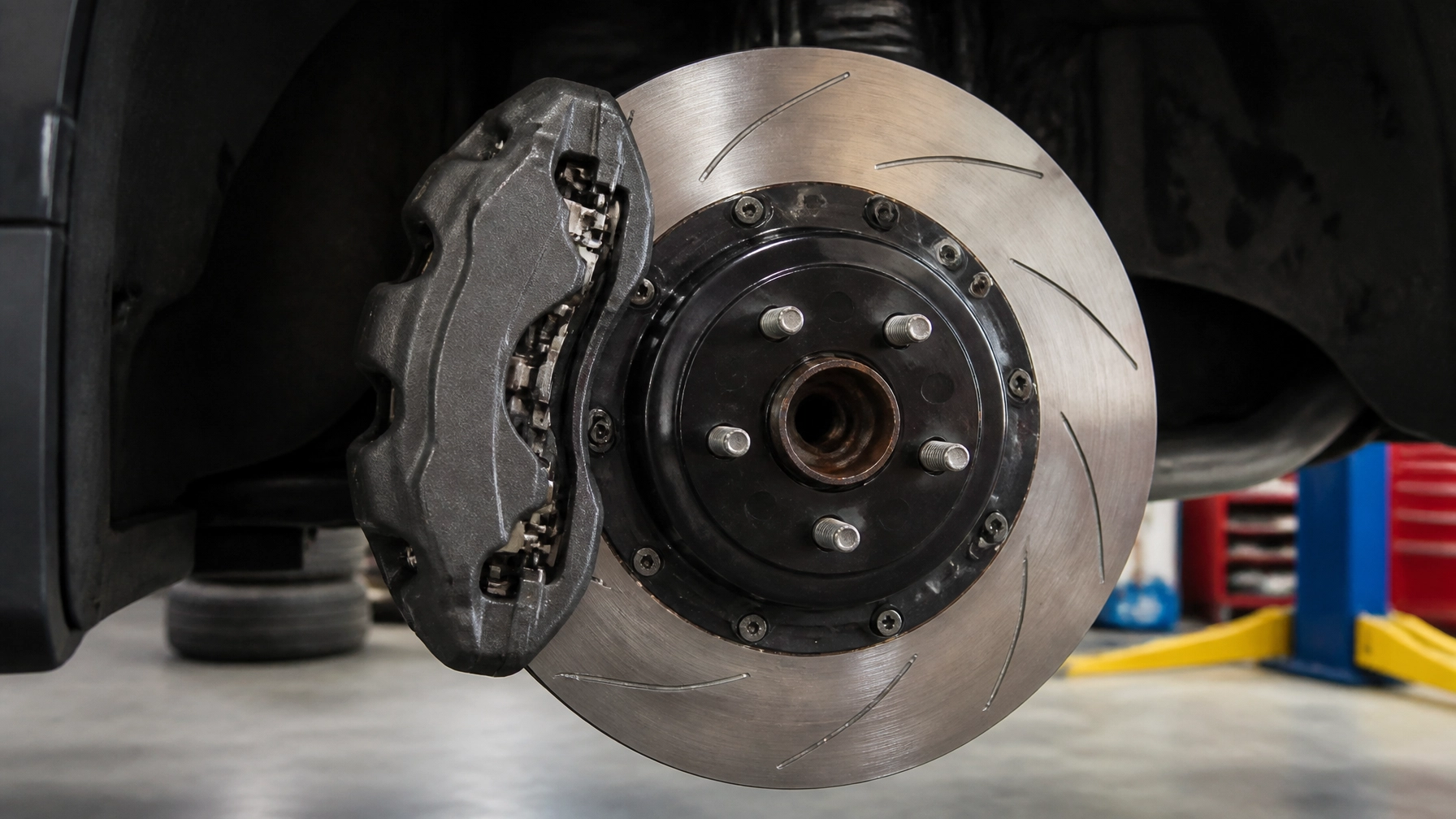
- Check the Pad Thickness: Look through the spokes of your wheel and find the circular metal rotor. Clamped over it is the caliper. Inside the caliper, you can see the brake pad. If the friction material (the part touching the rotor) looks to be less than a quarter-inch thick, you should start planning for a replacement soon.
- Look for Grooves in the Rotor: A healthy rotor should be smooth and shiny. If you see deep circular grooves or “scoring” (like the rings on a tree), it means debris has caught between the pad and the rotor, or the pads have worn down to the metal.
- Spot the Leaks: Take a look at the inside of your tires and the ground where you park. Brake fluid is usually clear to light amber in color and has an oily consistency. If you see wet spots around your wheels, your brake lines or calipers might be leaking.
Why El Campo Drivers Face Unique Brake Challenges
Living in the El Campo area means your vehicle deals with specific environmental factors that speed up brake wear. We aren’t just driving in a vacuum; our climate and landscape play a massive role in how your car performs.
First, there’s the Texas heat. Brakes work by converting kinetic energy into heat through friction. When the outside temperature is already hitting triple digits, your brakes have a harder time cooling down. This can lead to “brake fade,” where the brakes become less effective during prolonged use, or it can cause your brake fluid to degrade faster.
Second, we have dust and debris. If you spend time on ranch roads or construction sites, fine dust can get into the brake assembly. This grit acts like sandpaper, wearing down your pads and rotors faster than they would in a clean city environment. This is why we always recommend a more frequent inspection schedule for our local truck and Jeep owners.
The Phantom Auto Repair Difference: Expert Care You Can Trust
When it comes to something as critical as your brakes, you don’t want to leave things to chance. At Phantom Auto Repair, we pride ourselves on being more than just a shop; we’re your partners in vehicle safety.
Our team includes GM-certified technicians who bring factory-trained expertise to every job. Whether you’re driving a brand-new Chevy Silverado, a vintage weekend cruiser, or a fleet of delivery vans, we have the state-of-the-art diagnostic equipment to find exactly what’s wrong. We don’t guess; we test.
As a family-owned and operated business, we built our reputation on honesty. We’ll never tell you that you need new rotors if a simple pad replacement will do the trick. We also know that unexpected repairs can put a dent in the monthly budget, which is why we offer flexible, affordable financing options through Snap Finance. Our goal is to get you back on the road quickly and safely without breaking the bank.
Professional Diagnostics and Brake Fluid Maintenance
One of the most overlooked parts of brake safety is the brake fluid itself. Most manufacturers recommend a brake fluid flush every two to three years. Why? Because brake fluid is “hygroscopic,” which is a fancy way of saying it absorbs moisture from the air.
Over time, that moisture can cause internal corrosion in your brake lines and calipers. Even worse, water boils at a much lower temperature than brake fluid. If you’re braking hard and your fluid has too much water in it, the water can turn into steam, leaving you with no pedal pressure right when you need it most. Our team uses precision tools to check the moisture content of your fluid and ensure your hydraulic system is pure and powerful.
Don’t Wait for the Warning Light
Modern vehicles are incredibly smart, often featuring dashboard warning lights for “Brake,” “ABS,” or even “Low Fluid.” However, you shouldn’t wait for a light to pop up on your dash before you take action. By the time a sensor triggers a light, the problem has often already progressed to a stage that could be unsafe.
Proactive maintenance is always cheaper and safer than reactive repairs. A simple inspection during your regular oil change can catch thin pads before they ruin your rotors, saving you hundreds of dollars in parts and labor.
If you’ve noticed any of the signs we’ve discussed: the squealing, the vibrating, or that soft pedal feel: it’s time to act. Driving with compromised brakes doesn’t just put you at risk; it affects everyone else on the road in El Campo.
At Phantom Auto Repair, we’re ready to help. From simple inspections to complete custom off-road brake upgrades, we do it all with the same commitment to quality and rapid turnaround times. Let our family take care of yours.
Is your car trying to tell you something? Don’t ignore the signs. Give us a call at Phantom Auto Repair or stop by the shop today for a comprehensive brake inspection. We’ll get you back on the road with the confidence that comes from knowing your vehicle is in expert hands.
Related Posts
7 Fall Maintenance Checks Every El Campo Fleet Should Make Before Peak Freight Season
A fleet breakdown rarely happens at a convenient time. It happens when a delivery is already scheduled, a driver is waiting on a load, or one missing vehicle threatens to put an entire route behind schedule. During peak freight season,…

Can a Lift Kit Ruin Your Truck’s Ride Quality? Here’s the Truth About Off-Road Upgrades
A lifted truck should turn heads for the right reasons, not because it bounces across the road, wanders between lanes, or makes every pothole feel like a collision. That is the concern many truck owners have before scheduling a lift…
7 Mistakes You’re Making With Your Lift Kit Installation (And How to Fix Them)
There’s a specific kind of excitement that comes with ordering a new lift kit. You’ve seen the photos, you’ve picked out the tires, and you can already picture your truck towering over the traffic on Highway 59. But here’s the…