
Can a Lift Kit Ruin Your Truck’s Ride Quality? Here’s the Truth About Off-Road Upgrades
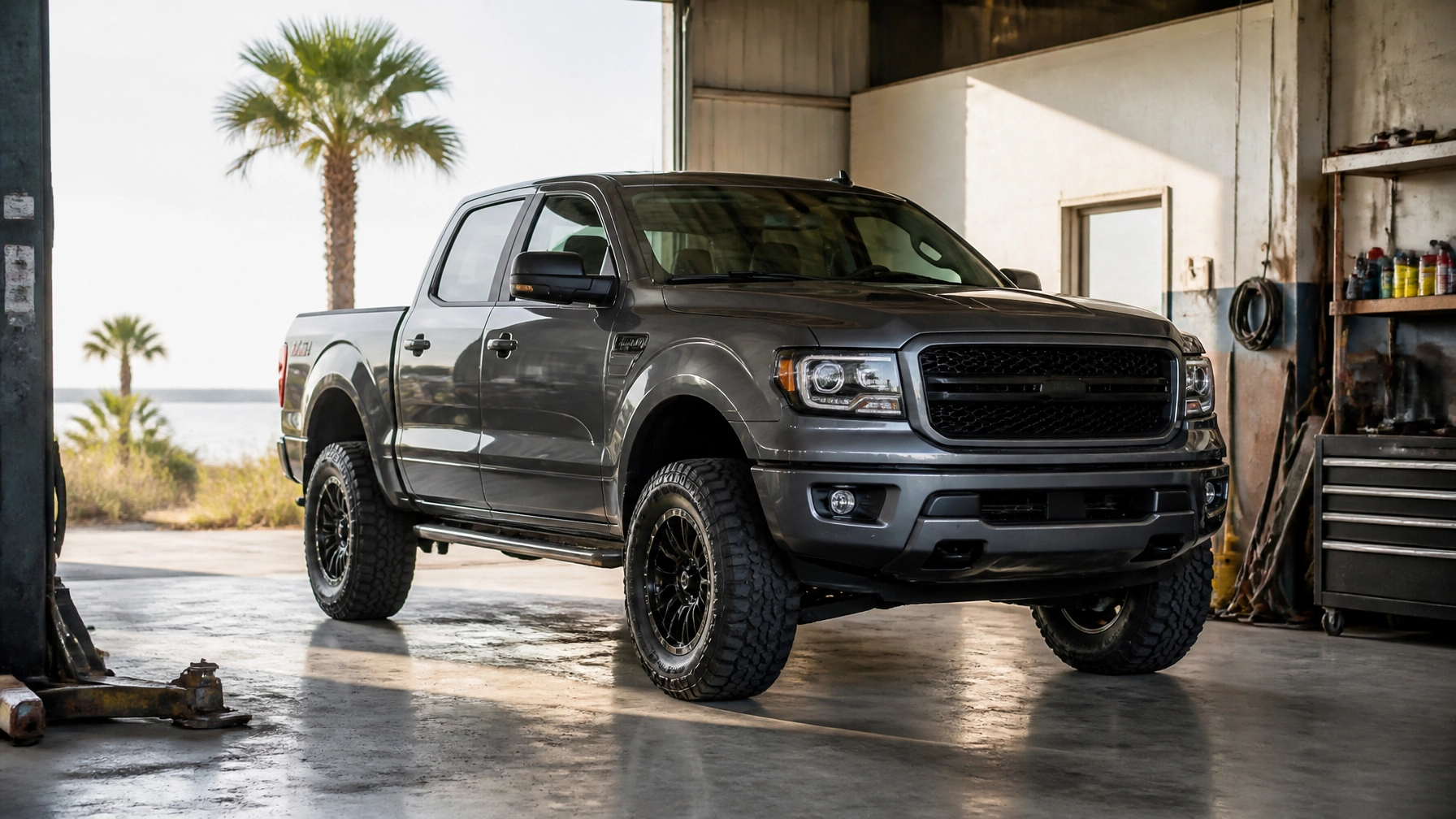
A lifted truck should turn heads for the right reasons, not because it bounces across the road, wanders between lanes, or makes every pothole feel like a collision.
That is the concern many truck owners have before scheduling a lift kit installation: Will lifting my truck ruin its factory ride quality?
The honest answer is that it can. A poorly matched kit, low-quality components, or careless installation may leave your truck stiff, unstable, and tiring to drive. But a properly planned lift can preserve a comfortable ride while giving you more ground clearance, better tire clearance, and the off-road capability you want.
For drivers in El Campo, the difference comes down to engineering and workmanship. A lift is not simply a collection of spacers and taller springs. It changes how your truck’s suspension, steering, tires, and safety systems work together.
Why lifting a truck changes the way it rides
Your truck’s original suspension was designed as a complete system. The springs support the vehicle’s weight, shocks control movement, steering components guide the wheels, and alignment angles keep the truck tracking properly.
When you raise the suspension, you change the relationship between those parts.
A lift can affect:
- Suspension travel
- Steering angles
- Control-arm positioning
- Driveshaft angles
- Center of gravity
- Tire contact with the road
- Body roll and braking behavior
- Advanced driver-assistance system sensors
A modest lift may create only small changes when the correct components are used. A taller lift requires more extensive geometry correction and supporting parts. As the truck gets higher, the center of gravity also rises, which can increase body movement during cornering.
That does not mean a lifted truck must ride poorly. It means the lift needs to be selected around how you actually use your truck, not only how tall you want it to look.
When a lift kit really does ruin ride quality
Most complaints about lifted trucks come from the same few mistakes. The problem is rarely the idea of lifting a truck itself. The problem is using the wrong parts or skipping important setup work.
Cheap or poorly matched shocks
Shocks control how quickly your suspension compresses and rebounds. Think of them as the dampers on a screen door. Without them, the door would slam open and shut. On a truck, weak or poorly valved shocks allow excessive bouncing, while overly stiff shocks transmit every bump directly into the cabin.
A lift kit may include shocks, but that does not automatically mean they are the right shocks for your truck’s weight, lift height, tire size, or intended use.
A truck driven mostly on pavement needs different suspension control than one carrying equipment, towing regularly, or spending weekends on rough trails. Correct shock valving helps the suspension absorb bumps without feeling loose or harsh.
Incorrect spring rates
Spring rate describes how much force a spring needs to compress a certain amount. A spring that is too stiff for your truck can make an unloaded pickup feel brittle and rough. A spring that is too soft may allow excessive sag, bottoming, or body movement.
The right spring depends on several factors:
- Your truck’s make and model
- Two-wheel drive or four-wheel drive configuration
- Front and rear axle weight
- Bumper, winch, skid plates, or other added equipment
- Towing and hauling needs
- Desired lift height
- Daily driving and off-road priorities
Choosing springs by lift height alone is a common mistake. A properly planned system considers the truck’s actual weight and how that weight is distributed.
Uncorrected suspension geometry
Lifting a truck changes the angles of suspension and steering components. Control arms, track bars, tie rods, and other parts may no longer operate in their preferred range.
If those angles are ignored, you may notice:
- Steering that feels nervous or vague
- Bump steer, where the truck changes direction as the suspension moves
- Uneven tire wear
- A steering wheel that sits off-center
- Reduced suspension travel
- Clunks or accelerated component wear
A complete lift system may require corrected control arms, track-bar adjustments, drop brackets, or other geometry solutions. The exact parts depend on the truck and the amount of lift.
This is one reason a spacer-only approach is not always the best choice. Spacers can create height, but they do not necessarily solve the geometry and ride-control issues created by that height.
What a properly engineered lift does differently
A quality lift kit installation starts with a conversation about your truck and ends with detailed checks after the parts are installed.
At Phantom Auto Repair, our approach to off-road customs in El Campo is built around the complete vehicle. We look beyond the visual stance to consider drivability, reliability, and the way the truck will be used.
It begins with the right lift height
For many daily-driven trucks, a moderate lift offers a better balance than an extreme setup. It can create room for larger tires and improve clearance without making the truck unnecessarily tall or difficult to control.
The ideal height depends on your goals. A commuter that sees occasional dirt roads may need a very different build from a dedicated trail truck. Choosing a lift based on use helps prevent the common mistake of sacrificing comfort for appearance.
Spring rates are matched to the truck
The correct springs support the truck without making it feel like an empty wagon with metal wheels. If you add a winch, steel bumper, bed rack, or other equipment, those changes should be considered before the final spring choice is made.
For trucks that carry changing loads, progressive-rate springs may help provide a comfortable initial ride while offering additional support as the suspension compresses. The best solution depends on the vehicle and the build plan.
Shocks are selected for control
Good shocks should keep the truck composed without making it punishing over normal roads. They help manage rebound after a bump, reduce excessive body movement, and maintain tire contact with the road.
This matters in El Campo, where your truck may move from smooth pavement to rough ranch roads, gravel, or uneven access roads in the same trip. Your suspension should be capable without becoming unpleasant during everyday driving.
Geometry is corrected instead of ignored
A professional build accounts for the new position of the suspension and steering components. Correcting geometry helps the truck track more naturally, preserve usable suspension travel, and reduce unnecessary stress on parts.

Alignment is not an optional final touch
After a lift kit installation, a professional alignment is essential. Alignment sets the angles at which the tires meet the road. Those angles affect steering feel, tire wear, stability, and braking behavior.
Even a well-designed lift can drive poorly if the final alignment is rushed or skipped. A truck that pulls to one side or wears the inside edge of its tires is not ready for regular use.
A proper post-installation inspection should include:
- Steering wheel position
- Toe, camber, and caster where adjustable
- Tire clearance at full steering lock
- Suspension clearance through its travel
- Fastener torque
- Brake line and ABS wire routing
- Driveshaft and steering component angles
- Tire pressure and wheel balance
Our broader auto repair services in El Campo also support the maintenance these trucks need after the build. Larger tires and off-road use can place additional demands on brakes, steering, wheel bearings, and other components.
Do modern trucks need ADAS calibration after a lift?
Many newer trucks use advanced driver-assistance systems, or ADAS. These may include lane-keeping assistance, adaptive cruise control, forward collision warnings, automatic emergency braking, and camera-based parking features.
These systems rely on cameras, radar, or other sensors that are calibrated around the truck’s original ride height and position. Raising the vehicle can change the angle between the sensor and the road.
That does not mean every lift automatically creates a problem, but it does mean ADAS should be considered as part of the build. Depending on the truck, manufacturer procedures may require sensor inspection, alignment-related checks, or recalibration after suspension changes.
If your truck has these features, ask about calibration requirements before work begins. A lift should improve your truck’s capability without compromising systems designed to help you drive safely.
How to protect your truck’s ride quality
Before approving any custom off-road builds, ask what is included beyond the lift itself.
A responsible plan should address:
- Intended lift height
- Tire size and wheel offset
- Spring rates
- Shock valving
- Suspension and steering geometry
- Alignment specifications
- Brake and ABS line clearance
- Driveshaft angles
- ADAS considerations
- Future upgrades and added vehicle weight
It is also important to think about the entire build. Oversized tires, heavy wheels, roof racks, bumpers, and recovery equipment all affect ride quality. Sometimes the lift is blamed for a rough ride when the real issue is excessive unsprung weight or tires inflated beyond what the vehicle needs.
For general background on selecting a lift system, RealTruck’s lift kit guide and this overview from AutoTrader on lift-kit effects provide useful starting points. Your truck still needs a vehicle-specific inspection before parts are chosen.
The truth for truck owners in El Campo
Yes, a lift kit can ruin your truck’s ride quality: but only when the build is treated as a shortcut instead of a complete suspension upgrade.
The right lift kit installation uses compatible parts, correct spring rates, properly valved shocks, corrected geometry, and a precise alignment. It also considers tire weight, vehicle use, braking, steering, and ADAS requirements. Done correctly, a lifted truck can remain comfortable and controlled on the road while becoming far more capable off it.
At Phantom Auto Repair, we combine everyday repair expertise with custom off-road builds for drivers in El Campo and surrounding areas. Whether you are planning a mild truck performance upgrade or a more serious trail-focused build, we can help you choose a setup that fits the way you drive.
Contact Phantom Auto Repair to discuss your truck, your goals, and a lift that performs as well as it looks.
Related Posts
7 Fall Maintenance Checks Every El Campo Fleet Should Make Before Peak Freight Season
A fleet breakdown rarely happens at a convenient time. It happens when a delivery is already scheduled, a driver is waiting on a load, or one missing vehicle threatens to put an entire route behind schedule. During peak freight season,…

7 Mistakes You’re Making With Your Lift Kit Installation (And How to Fix Them)
There’s a specific kind of excitement that comes with ordering a new lift kit. You’ve seen the photos, you’ve picked out the tires, and you can already picture your truck towering over the traffic on Highway 59. But here’s the…
Timeless Performance: Why Vintage Car Maintenance in El Campo Requires a Specialized Touch
There’s a specific kind of magic that happens when you turn the key of a classic car. It’s not just the rumble of the engine; it’s the smell of the upholstery, the weight of the steering wheel, and the way…